
Enterprise e-commerce brands compete in an environment where product catalogs change weekly, category pages face relentless competition, and organic visibility is inseparable from revenue. Link building in this context is not a side campaign or a volume exercise. It is a strategic discipline that shapes how search engines interpret brand authority, topical relevance, and commercial trust across thousands of URLs.
At Link Building Agency, we treat e-commerce link building as an enterprise growth system. The goal is not simply to acquire more referring domains. The goal is to reinforce the pages that drive discovery, consideration, and conversion—while protecting the brand from low-quality tactics that create long-term risk.
Why E-commerce Link Building Is Different
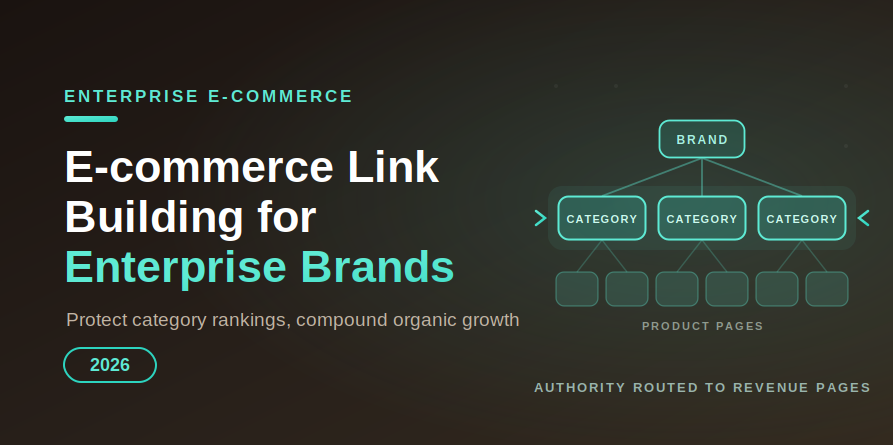
Traditional content sites often concentrate authority on a relatively small set of cornerstone articles. E-commerce architectures are different. A mature retailer or marketplace typically maintains:
- Brand and homepage equity that signals institutional trust
- Category and subcategory hubs that capture high-intent commercial demand
- Product detail pages that convert but rarely attract natural editorial links on their own
- Content and editorial properties that educate buyers and support seasonal campaigns
- International or multi-storefront variations that fragment authority if poorly managed
Search engines evaluate these layers as a connected system. Links that only point to the homepage leave category pages under-supported. Links that chase product SKUs without editorial context often fail to stick. Links that ignore brand reputation and site architecture can inflate vanity metrics while leaving revenue pages exposed.
Enterprise e-commerce link building must therefore be deliberate about destination pages, anchor strategy, topical alignment, and the commercial narrative behind every placement.
Map Authority to Revenue Architecture
Before outreach begins, high-performing programs start with a structural map connecting commercial priority to link opportunity.
Prioritize pages by business impact
Not every URL deserves equal investment. Enterprise teams should classify pages by contribution to revenue, margin, strategic growth, and competitive difficulty. Flagship categories, high-margin collections, and brand-defining product lines usually warrant sustained authority building. Long-tail product pages may benefit indirectly through category-level reinforcement and internal linking rather than direct outreach.
Align link targets with search intent
A category page ranking for a competitive commercial query needs a different support profile than a buying guide designed for informational demand. Editorial placements on industry publications, trade media, and research-led features are often better suited to category and brand authority. Comparison-oriented content and expert roundups can reinforce mid-funnel assets. Product-level mentions work best when they appear in context—reviews, expert selections, or problem-solution narratives—rather than as isolated promotional inserts.
Strengthen the internal link graph
External links create opportunity. Internal links distribute it. Enterprise catalogs frequently suffer from weak pathways between editorial content, category hubs, and conversion pages. A mature link building program pairs acquired authority with an internal linking model that routes equity to the pages that matter commercially.
Build Assets That Earn Enterprise-Grade Links
E-commerce brands rarely win premium placements with generic blog posts. Publishers and journalists respond to assets that add evidence, originality, or utility to their audience.
Original research and market benchmarks
Surveys, pricing studies, category demand analyses, and consumer behavior reports give editors a reason to cite your brand. These assets work especially well for enterprises with access to proprietary transaction or audience data. When packaged carefully, research can generate multi-touch coverage across vertical media, business press, and niche authority sites.
Expert-led buying frameworks
Complex categories—enterprise software accessories, industrial equipment, premium home systems, regulated goods—reward guidance that reduces purchase risk. Comprehensive frameworks, specification explainers, and decision matrices can attract links from educators, consultants, and specialist publishers who need reliable references.
Seasonal and cultural storytelling
Retail calendars create natural moments for coverage, but enterprise brands should avoid thin seasonal fluff. The strongest campaigns connect seasonal demand to brand expertise: sustainability reporting around peak shipping periods, safety guidance for holiday product categories, or supply-chain transparency stories that elevate institutional trust.
Digital PR with commercial discipline
Digital PR is not separate from link building for e-commerce brands; it is often the highest-leverage acquisition channel. The discipline lies in connecting newsworthy stories to SEO destinations without forcing unnatural anchors or diluting brand voice. Link Building Agency approaches digital PR as an authority engine that supports both reputation and rankings.
Outreach That Protects Brand Equity
Enterprise brands cannot afford reckless outreach. A single wave of low-quality placements can create cleanup costs, compliance issues, and reputational damage that outweigh any short-term ranking movement.
Qualify publishers with commercial standards
Domain metrics alone are insufficient. Evaluate audience relevance, editorial quality, outbound link patterns, historical spam signals, and brand adjacency. A fashion retailer does not need the same publisher mix as a B2B industrial supplier. Relevance compounds; indiscriminate volume does not.
Prefer contextual placements over transactional footprints
The most durable e-commerce links appear inside substantive editorial content. That may include expert commentary, data citations, product roundups with clear criteria, or feature stories about innovation and operations. Soft placements that exist only to host a link tend to decay in value and increase risk.
Coordinate with brand, legal, and merchandising
Large organizations often have approval workflows for claims, product naming, and partner mentions. Effective agencies anticipate those constraints. Campaign briefs should define approved messaging, restricted claims, disclosure requirements, and escalation paths before outreach scales.
Category Authority Versus Product Mentions
One of the most common strategic mistakes in e-commerce SEO is over-investing in product-level link acquisition. Products change. Inventory rotates. URLs are redirected or retired. Category and brand assets usually offer more durable destinations for hard-won authority.
That does not mean product mentions are useless. They can support launches, high-margin hero products, and competitive conquest campaigns. The key is balance: use product mentions where commercial timing justifies them, and invest continuously in the hubs that will still matter twelve months later.
Link Building Agency typically designs e-commerce programs around a portfolio model: core brand and trust links that stabilize domain authority; category reinforcement for priority commercial clusters; launch support for time-sensitive merchandising moments; and content amplification for educational assets that feed the funnel.
This portfolio approach prevents teams from chasing opportunistic placements that look impressive in a spreadsheet but fail to move revenue pages.
Measurement Beyond Referring Domain Counts
Enterprise stakeholders need more than a monthly tally of new links. A credible e-commerce measurement framework connects placements to visibility and business outcomes.
Track ranking movement for priority category and non-brand commercial queries. Monitor organic sessions and assisted conversions on supported URL clusters. Evaluate referring domain quality distribution over time, not just absolute growth. Assess anchor diversity and destination concentration to ensure the profile remains natural.
Attribution will never be perfect in organic search. That is not an excuse for vague reporting. Mature programs define hypotheses, observation windows, and leading versus lagging indicators so leadership can judge progress with commercial clarity.
Operational Excellence at Catalog Scale
E-commerce link building fails when treated as disconnected campaigns. Enterprise brands need operating cadence: quarterly priority resets aligned to merchandising calendars, continuous publisher development, asset production pipelines, and quality assurance that prevents risky placements from entering the live profile.
Technical SEO collaboration is equally important. A brilliant placement pointing to a thin, slow, or poorly structured category page wastes opportunity. International hreflang issues, soft-404 product templates, or crawl inefficiencies can mute otherwise strong link acquisition.
The brands that win treat link building as part of a broader organic growth operating system—content, technical health, internal linking, digital PR, and conversion experience working together.
What Enterprise Leaders Should Demand
If you are evaluating partners or rebuilding an in-house capability, insist on strategy that starts from revenue architecture, not generic outreach templates. Demand publisher quality standards that protect brand equity. Require transparent reporting that connects activity to commercial priorities. Expect creative asset development capable of earning coverage from credible media.
Link Building Agency was built for this standard. We help enterprise e-commerce brands turn link building into a controlled, scalable advantage—one that strengthens category leadership, supports product discovery, and compounds organic growth without compromising brand trust.
E-commerce competition will only intensify as catalogs expand and AI-assisted discovery reshapes how buyers find products. Brands that invest in authoritative, commercially aligned link building today will own more of the organic shelf space competitors cannot buy overnight.